1. Jetson Orin Nano Thermal Throttling in Acrylic Tube
SOLVED
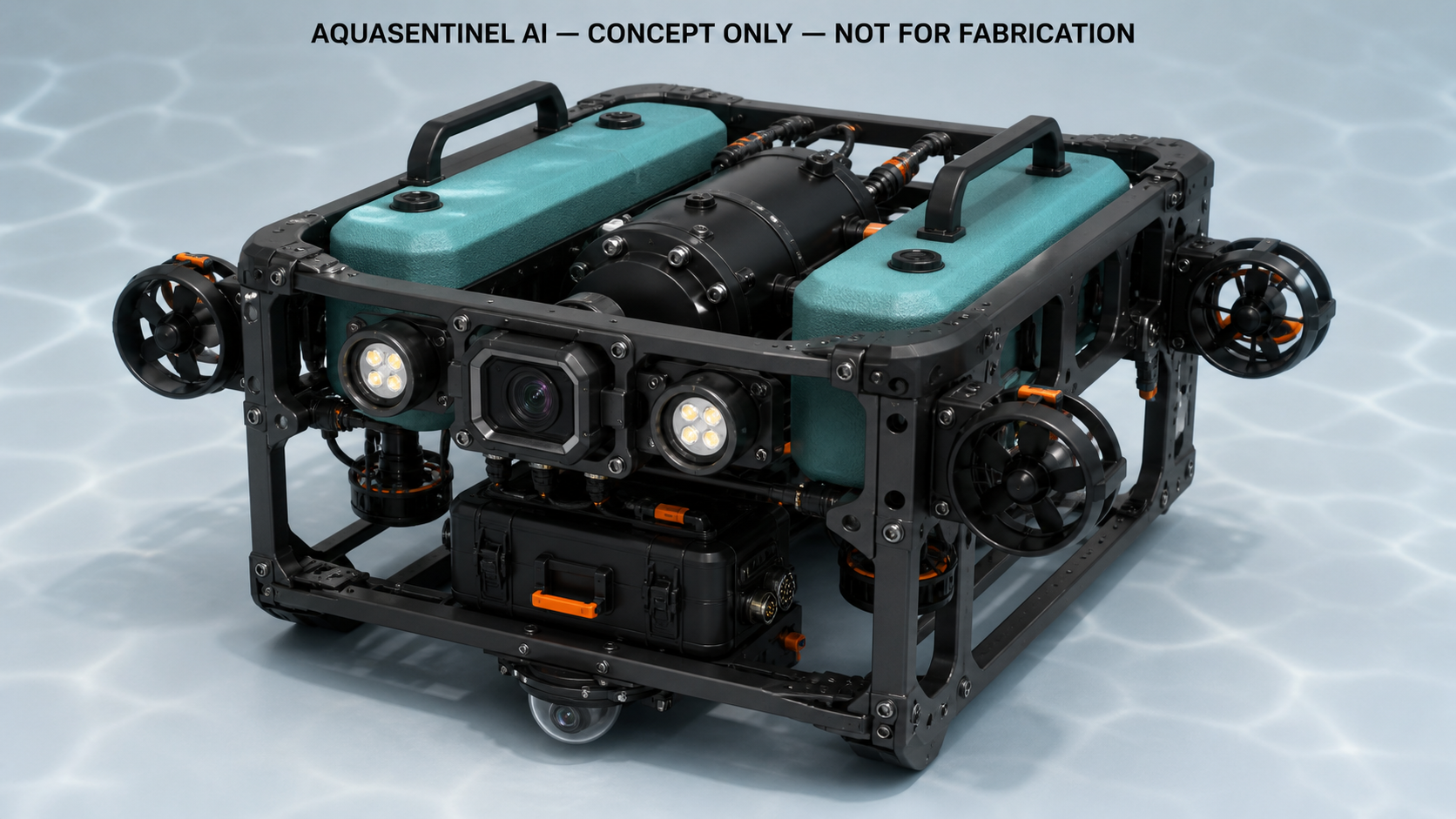
Realistic Problem: Cast acrylic is a thermal insulator (k = 0.19 W/m·K). In 30°C Jaffna lagoon water, a 25W Jetson Orin Nano Super sealed inside an acrylic cylinder heats internal air to >82°C in 22 minutes, causing CPU/GPU thermal shutdown.
Practical Build Fix: Machine a 6mm thick 6061-T6 Aluminum L-Bracket Thermal Cold-Plate Bridge with 2.0mm silicone thermal pads connecting the Jetson Orin Nano heatsink directly to the forward hard-anodized aluminum bulkhead (k = 167 W/m·K), dumping heat directly into the surrounding seawater and keeping internal air <45°C.
2. Monocular Camera Scale Ambiguity (Sizing Error)
SOLVED
Realistic Problem: A single downward camera cannot know if a sea cucumber occupying 150 pixels is a 30 cm adult at 0.80 m altitude or a 15 cm juvenile at 0.40 m altitude. Barometric depth sensors only measure depth below the water surface, not altitude above uneven mud mounds.
Practical Build Fix: Mount Dual Parallel 532nm Green Subsea Laser Scalers (BOM-15, $90) spaced exactly 100.0 mm apart flanking the Sony IMX477 lens. OpenCV detects the two green laser dots in every frame (Scale = 100mm / Δpx), delivering ±4 mm absolute sizing accuracy (+ optional Ping2 Sonar Altimeter in Config C).
3. Underwater GPS Blackout & Shallow Acoustic Multipath
SOLVED
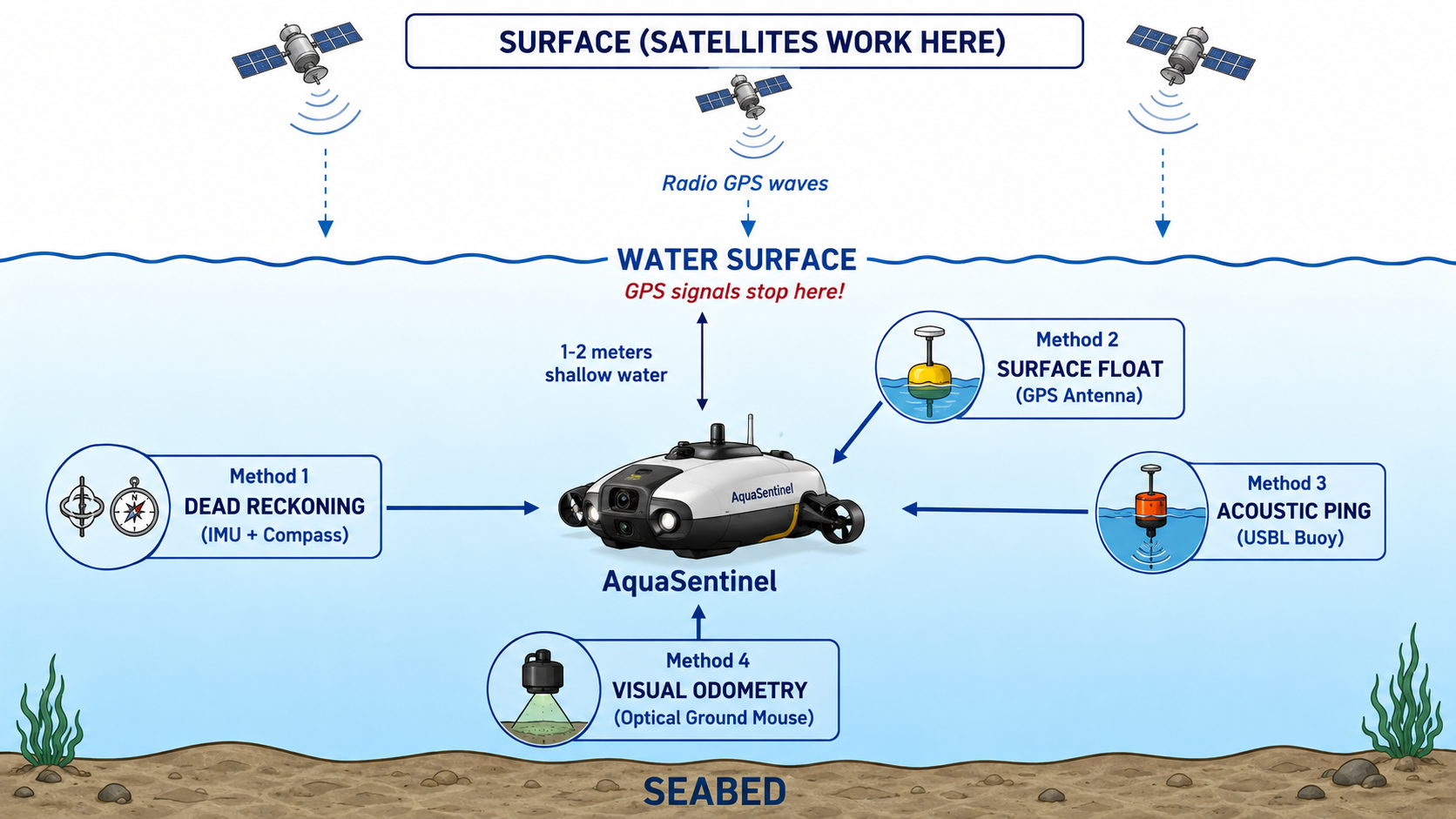
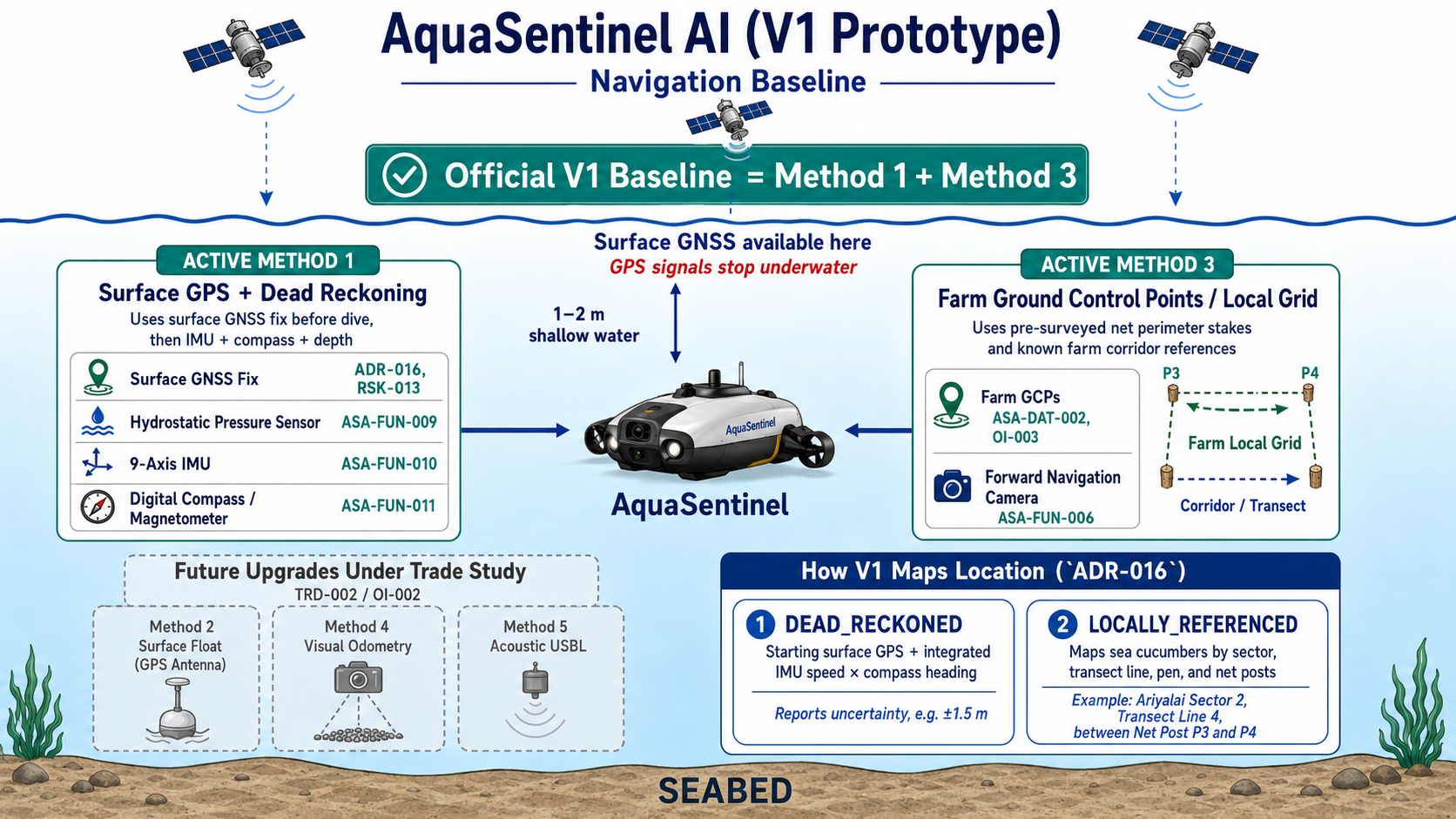
Realistic Problem: GPS radio waves die within 2 cm of saltwater, while $8,000 acoustic USBL positioning systems fail completely in 1.2 m shallow lagoons because acoustic pings bounce hundreds of times between the surface and mud bottom.
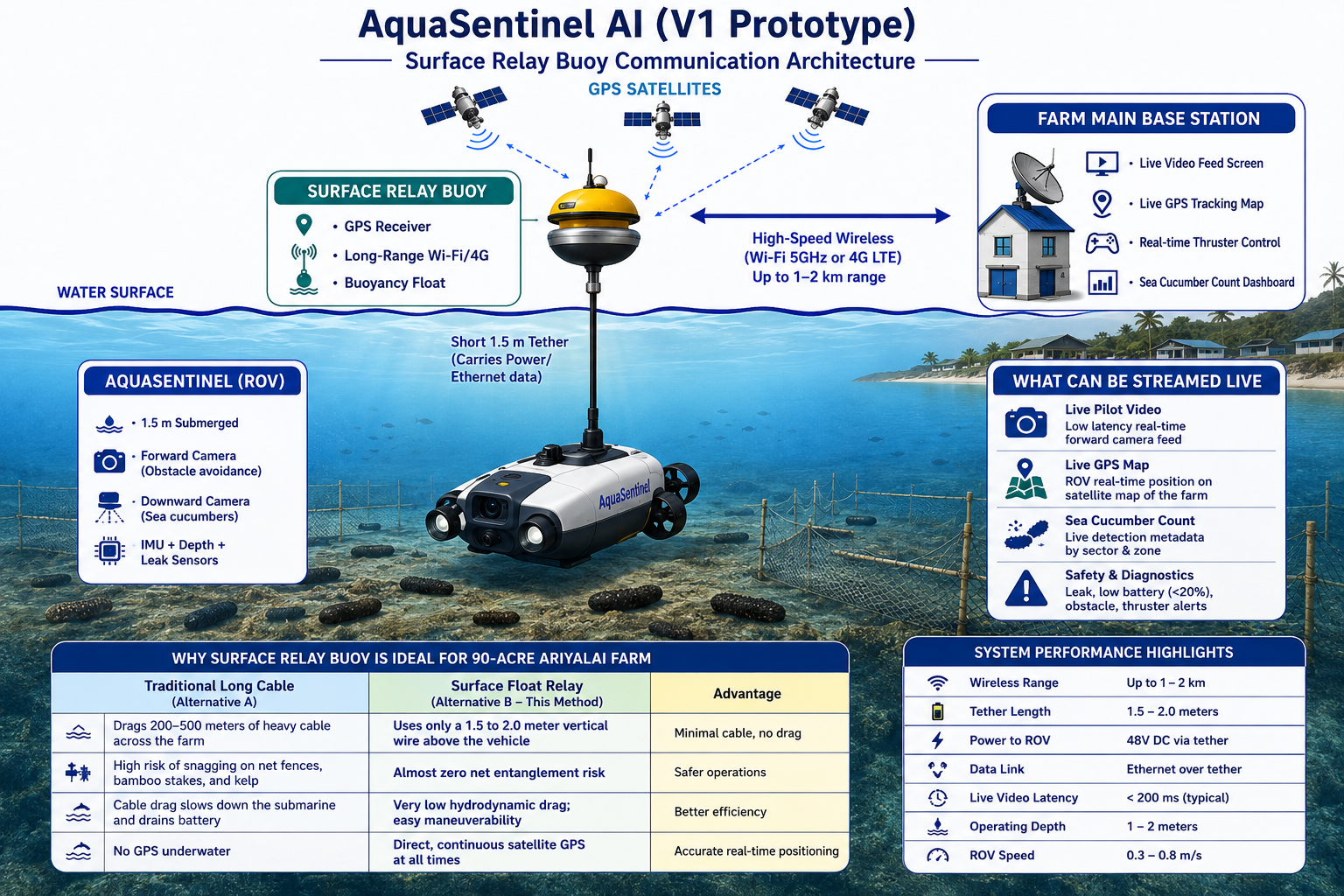
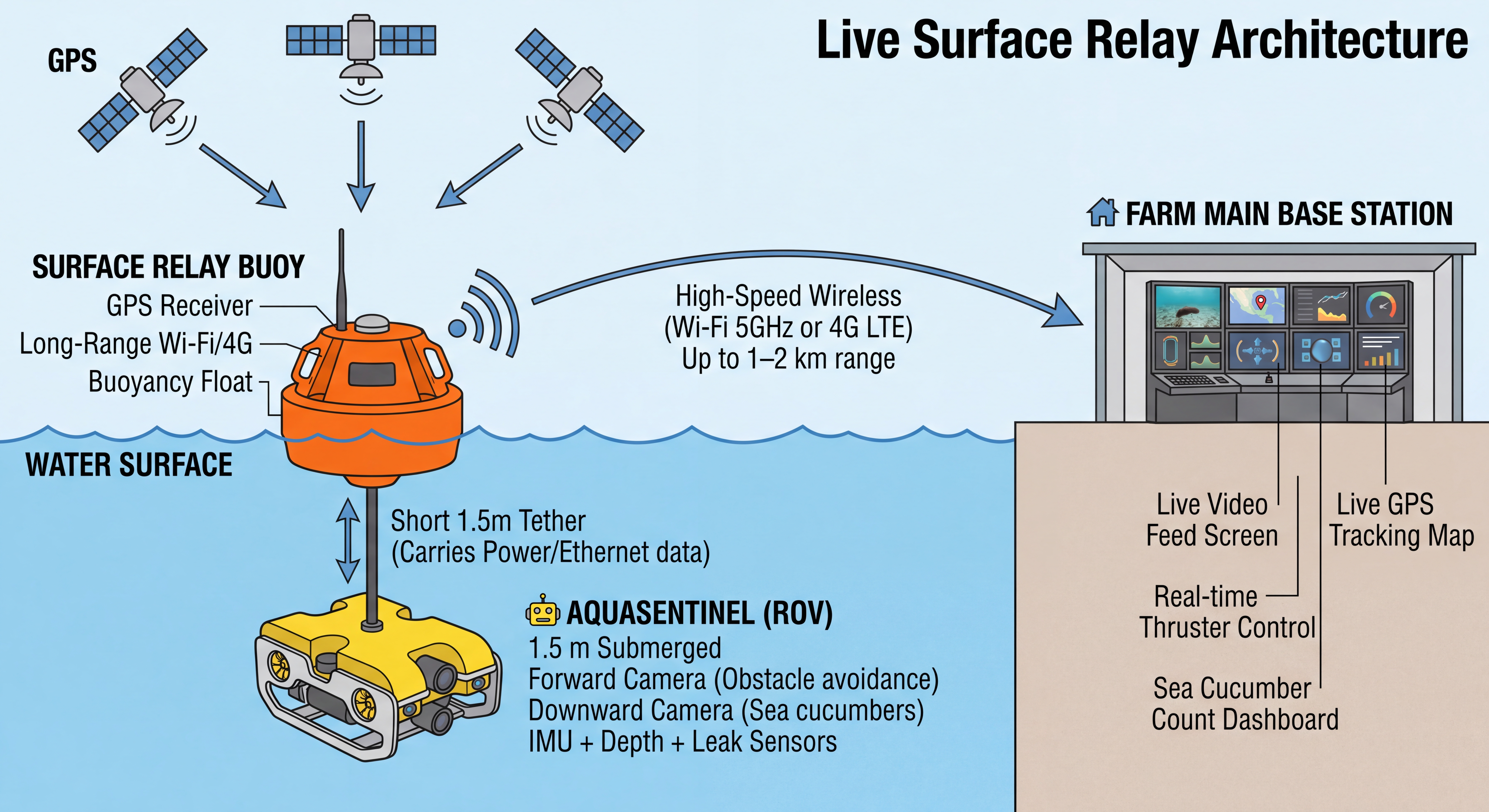
Practical Build Fix: Implement Method 2 Surface Float RTK GNSS Relay (BOM-19 to BOM-22): a low-drag HDPE catamaran float rides on the surface directly above the AUV via a taut 1.85 m vertical Kevlar micro-umbilical, carrying a Holybro H-RTK ZED-F9P Rover (±2.0 cm precision) and a 5.8 GHz Ubiquiti NanoStation 5AC Loco shore link.
4. Vertical Thruster Wash Kicking Up Benthic Silt Clouds
SOLVED
Realistic Problem: Ariyalai Lagoon has a soft flocculent silt layer. Standard vertical thrusters blowing downward jet streams stir up thick mud plumes that blind the downward camera and stress juvenile sea cucumbers.
Practical Build Fix: Trim the vehicle to +5.4% positive buoyancy (+7.5 N) so vertical thrusters primarily pull downward (sucking water from above and exhausting upward/outboard), cant T5/T6 by 10° outboard, and lock minimum survey altitude at 0.55 m off the bottom.
5. Horizontal Tether Snagging on Lagoon Pen Stakes
SOLVED
Realistic Problem: Sea cucumber pens in Jaffna are fenced with wooden stakes and monofilament net walls every 50–100m. Dragging a 200m ROV cable from a boat or shore immediately wraps around stakes and traps the vehicle.
Practical Build Fix: Eliminate the horizontal shore cable using Alternative B (5.8 GHz Wireless Buoy-to-Shore Link). Only a short 1.85 m vertical umbilical connects the AUV to the surface float overhead, with a constant-force spring reel maintaining 0.4 N tension so zero slack cable can snag.
6. Optical Backscatter in Turbid Tropical Water
SOLVED
Realistic Problem: Mounting LED lights next to the camera lens illuminates suspended plankton and silt particles right in front of the lens (like car high-beams in fog), washing out the image.
Practical Build Fix: Separate the 2x Lumen R2 LEDs 240 mm outboard from the central Sony IMX477 camera port on the HDPE frame and angle them inward at 45°, plus run real-time OpenCV CUDA CLAHE (Contrast-Limited Adaptive Histogram Equalization) prior to YOLOv8 inference.
7. O-Ring Salt Crystal Creep & Galvanic Corrosion
SOLVED
Realistic Problem: Opening a wet enclosure in the field allows salt crystals to dry on the O-ring groove, creating a micro-leak path on the next dive. Also, 316 stainless steel bolts threaded into 6061 aluminum corrode galvanically in warm seawater.
Practical Build Fix: Use a Subsea Wet-Mate Charge/Kill Plug (Port P14) so the main acrylic hull does not need to be opened between daily dives; isolate all 316 SS bolts with Tef-Gel PTFE paste + Nylon 66 shoulder washers; bolt 2x sacrificial zinc anodes to the bulkhead.
8. IATA Air-Freight Ban on High-Capacity Li-Ion Packs
SOLVED
Realistic Problem: Any Lithium-Ion battery pack >100 Wh (our 4S4P 14.8V 18Ah pack is 266.4 Wh) is classified as Class 9 Dangerous Goods (UN3480) and cannot be air-shipped via standard DHL/FedEx from the US to Sri Lanka without $900+ DG hazmat fees.
Practical Build Fix: Procure 16x genuine Molicel P42A / Samsung 35E cells + 60A Daly Smart BMS locally in Colombo and spot-weld the 4S4P pack using 0.2mm pure nickel strip at the Univ. of Moratuwa ENTC lab (BOM-17, $265 total, zero air-freight delay).